PMVA - What’s in the name?
By Jim Ridley.
From experience and discussion with colleagues, other training organisations, my own experiences and those who may be seeking training the “Label” or “Name” used at the beginning of any search or conversation is influenced by many things. There is a significant diversity in the language and definitions used when related to training in restrictive practices across health, social care and education. So, when searching for training to support individuals who may present with distressed or behaviours of concern what terminology goes into your “search”?
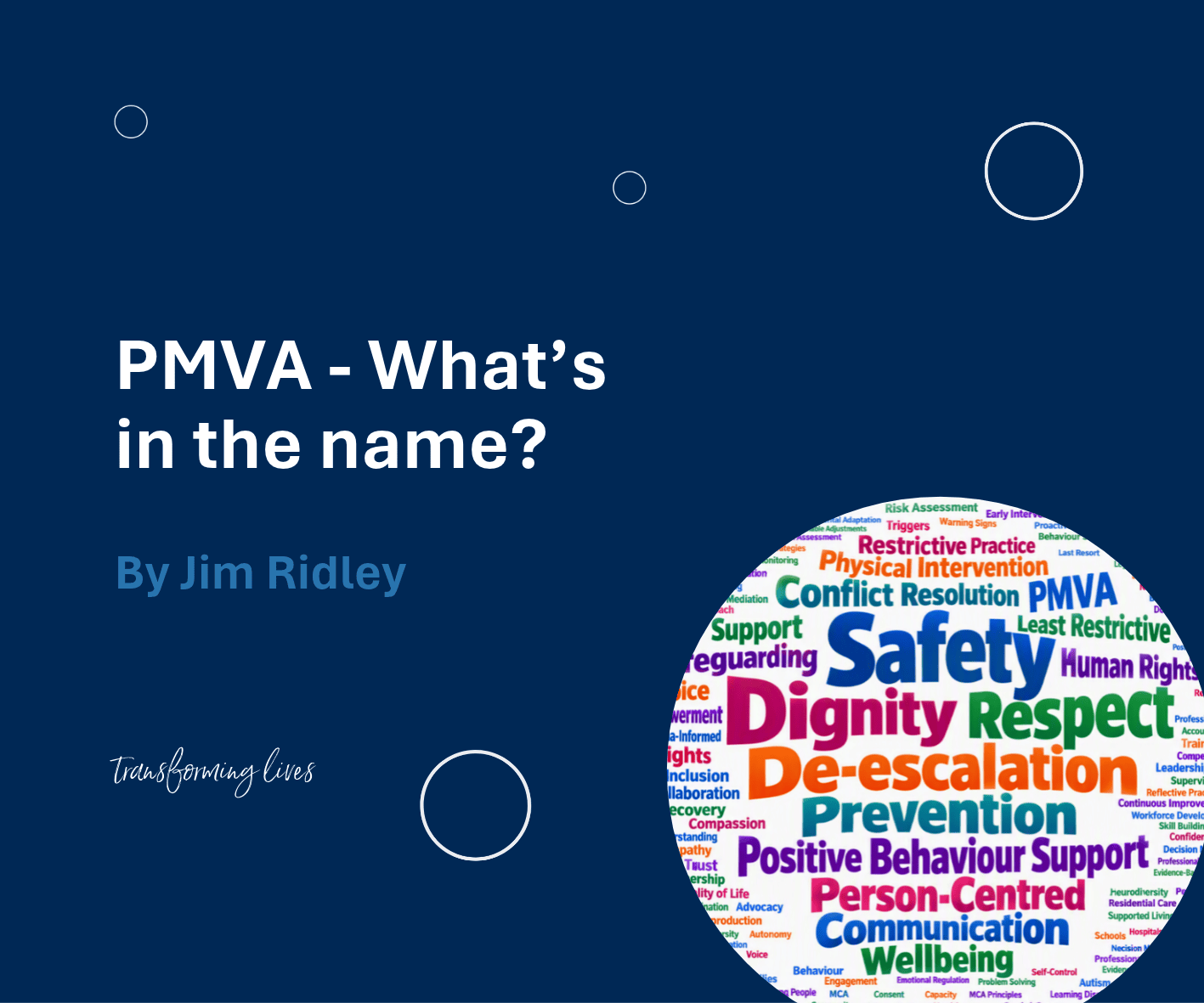
I have worked in the areas of health and social care for over 35years and seen training being called all number of things, some of which are shared in the image. It would seem that most will begin their search for training and training providers based on the name, language or title of training that is either familiar to them or captures the perceived task, so for example, behaviour support, restraint, restrictive physical intervention, conflict resolution or violence prevention and reduction. Of course, we also know that some will start with searching the ACT (Association of Certified Training) pages for certified training organisations who meet the requirements of the RRN Training Standards, but even then, may continue to only focus on programmes that are associated with that initial “First Impression”.
At PRICE training it is not uncommon for enquiries to come, and the question be “Do you do PMVA?”, or “Your website doesn’t say if you do PMVA?”. It’s at this point we let people know that we don’t offer a “programme” that is referred to as “PMVA”, but we do offer a rights based, least restrictive, and comprehensive programme of training which may if required include the use of fully risk assessed physical intervention techniques, that can be used collectively to assist those who access our training to provide a safe and effective response to individuals who may experience distress.
We recognise at PRICE training terms such as PMVA (Prevention and Management of Violence and Aggression) or MVA (Management of Violence and Aggression) may be the most familiar terms used within health and social care services and there remains training organisations who name their training as PMVA and for those certified by ACT as meeting the RRN Training Standards meet all of the same requirements as we do.
SO, we want to make you aware of what we do because WE know that when you ask for PMVA you are nearly always understanding that you are wanting a programme of training that supports a rights-based approach that ensures your teams are aware of the legal and regulatory responsibilities related to your services. In turn we at PRICE can ensure that your teams are supported by having access to a practical learning approach that includes clear reference to the theoretical underpinnings of person-centred care, including communication, diversity and trauma across the lifespan. This format then also supports our teaching and learning approach that establishes skills in dynamic risk assessment and de-escalation which also guides and supports the individual to consider least restrictive approaches that may if required include physical support techniques.
BUT … we don’t stop there, so we also ensure that we share skills and knowledge related to post incident support, learning and facilitation, and if needed offer a wider offer of support and consultation. As an organisation committed to learning from working with people, we recognise the importance of being responsive to people’s needs including those who are offering support that cannot be underestimated so we make sure that’s in there!
So, when you ask if we do “PMVA” we will continue to say, “No, but we do offer …” and that’s the most important part of developing the learning relationships that we develop with you. Working with you to design a programme of training delivery that enables your services needs and fundamentally those you support to be offered a responsive approach that shows you are committed to Protecting Rights In a Caring Environment.
Share this story